
I'm John Bertsch, a San Diego REALTOR® with Coldwell Banker West, and I spent the years before real estate developing and redesigning homes. I built two canyon homes in Mission Hills and The Cairo live/work building in Hillcrest, turned an ATM hut into the Meshuggah Shack coffee bar, and transformed my own houses in Mission Hills and North Park. Here's how I work and what each project taught me.
What a Real Estate Developer Actually Does
People often give me a blank look when I use the word developer, so here's how I describe it. It's like making a movie. There's the director, the writers, the stars and the caterer. I'm not any of those. I'm the person who brings all the parties together, along with the financial backing, to get the movie made.
Real estate development works the same way. I'm not the contractor, the architect, the surveyor or the insurer. I'm the one who brings them together, along with the financing, to get something built.
How I Chose What to Build
A lot of it is gut instinct. That instinct comes from deep familiarity with a neighborhood, attention to the national events that affect housing, and my best guess at what the market wants and what the finished home will sell for. If the likely sale price justifies the money I expect to invest, the project moves forward.
I like infill development: finding land inside the fabric of an existing neighborhood where something better can be built and sold. In Mission Hills it was a run-down house on a double lot above a canyon. On Park Boulevard it was another double lot, with small cottages on one side and nothing on the other.
From Sketch to Keys: How a Project Comes Together
Once a project made sense, my first task was finding an architect who shared my values: sensitivity to how land is used and protected, how a home fits its neighborhood, and a willingness to work with a one-person operation instead of a large development company. On my projects that was Safdie Rabines Architects, a husband-and-wife firm who lived five houses away from me in Mission Hills. From there, every project followed the same steps:
- Schematic design. The architects work through zoning and building codes and give a first picture of what the project could look like.
- Financing. I show a lender the plans, my cost estimates and the projected profit. Banks want enough cushion in case costs rise.
- Choosing a contractor. A get-to-know-you meeting with the architects to find a builder who understands what we're attempting.
- Design development. My favorite stage: 3D renderings, sometimes a physical model, and lots of ways to make the spaces work while staying on budget.
- Construction drawings and bids. On larger projects the contractor collects subcontractor bids and comes back with, one hopes, a solid estimate.
- Construction insurance. In San Diego, whether a site sits in a high fire-hazard zone can decide whether anyone will insure the project at all. No insurance, no project.
The developer gets paid last. After the lender, the architects, the contractor and everyone else are paid, whatever is left is yours to keep. And if there isn't enough to go around, things get considerably less fun.
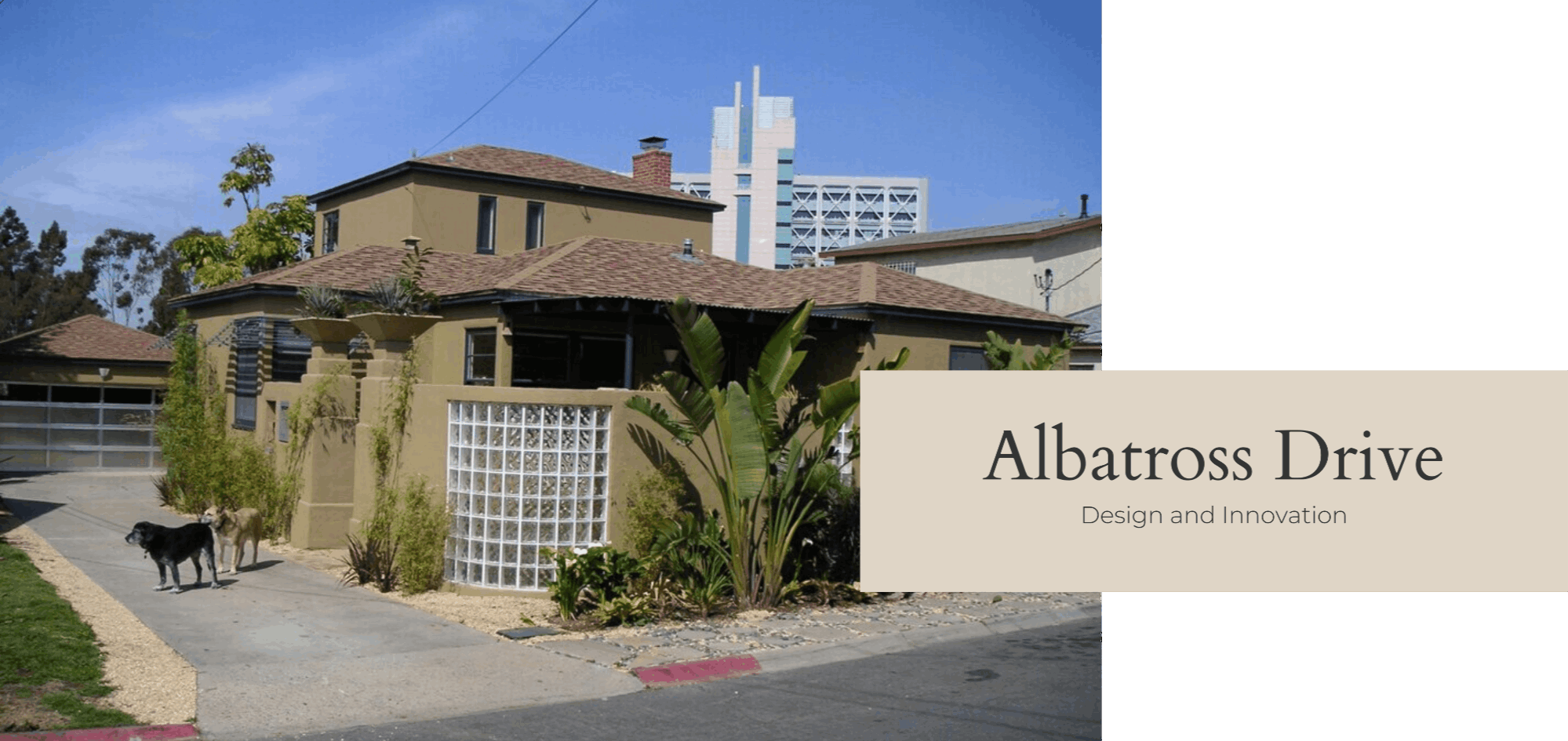
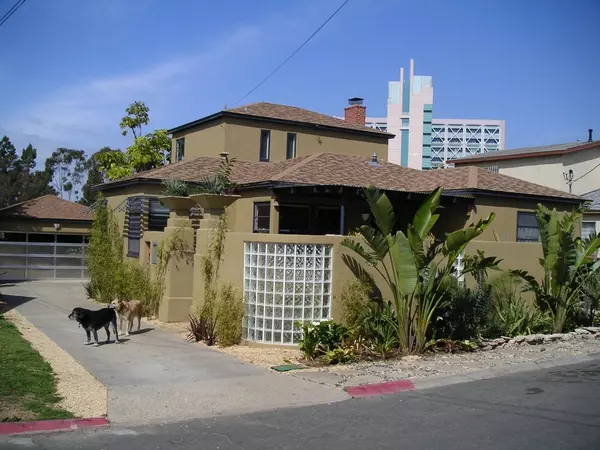
Albatross Drive, Mission Hills: A Private Outdoor Room
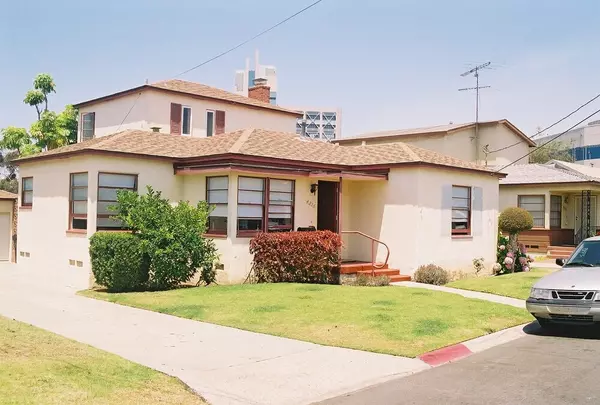
You probably wouldn't guess the houses I've chosen to buy. Mission Hills, Hillcrest and North Park are full of graceful Craftsman and Spanish Eclectic homes that say "come on in." The houses I picked were plain, a little severe, with a front porch barely big enough for two people to stand on and certainly not two chairs.
That plainness is exactly why I chose them. A house with little charm gave me the freedom to rethink it from scratch, especially the outside. We have a fabulous climate here, so why build homes that separate us from it?
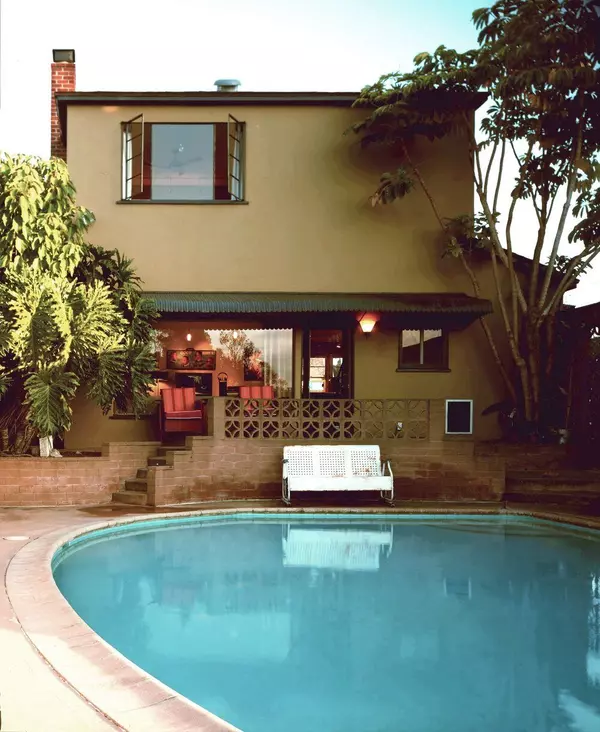
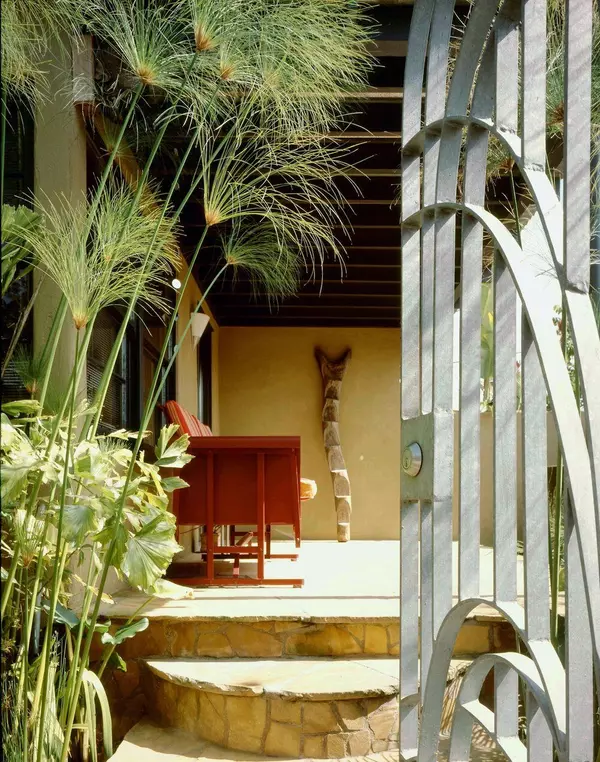
At Albatross Drive I built a six-foot wall around part of the front yard and created a private outdoor room. I designed a grotto with a fountain and flowing beds of water planted with lilies and papyrus, and ran small drip lines through the wall so water trickles out the way it would in nature. Birds, bees and dragonflies moved in, and the couple of goldfish I added started having babies. I also ripped out the straight-shot sidewalk to the old porch and routed the entry through the new garden. My neighbors were skeptical at first, but it changed how the house met the street.
The street was busy, around the corner from a large clinic and the UCSD hospital in Hillcrest. Sitting behind the wall, I was invisible. Stand up, and I could survey everything going on. Privacy without being cut off from the world.
Two Canyon Homes on W. Lewis Street, Mission Hills
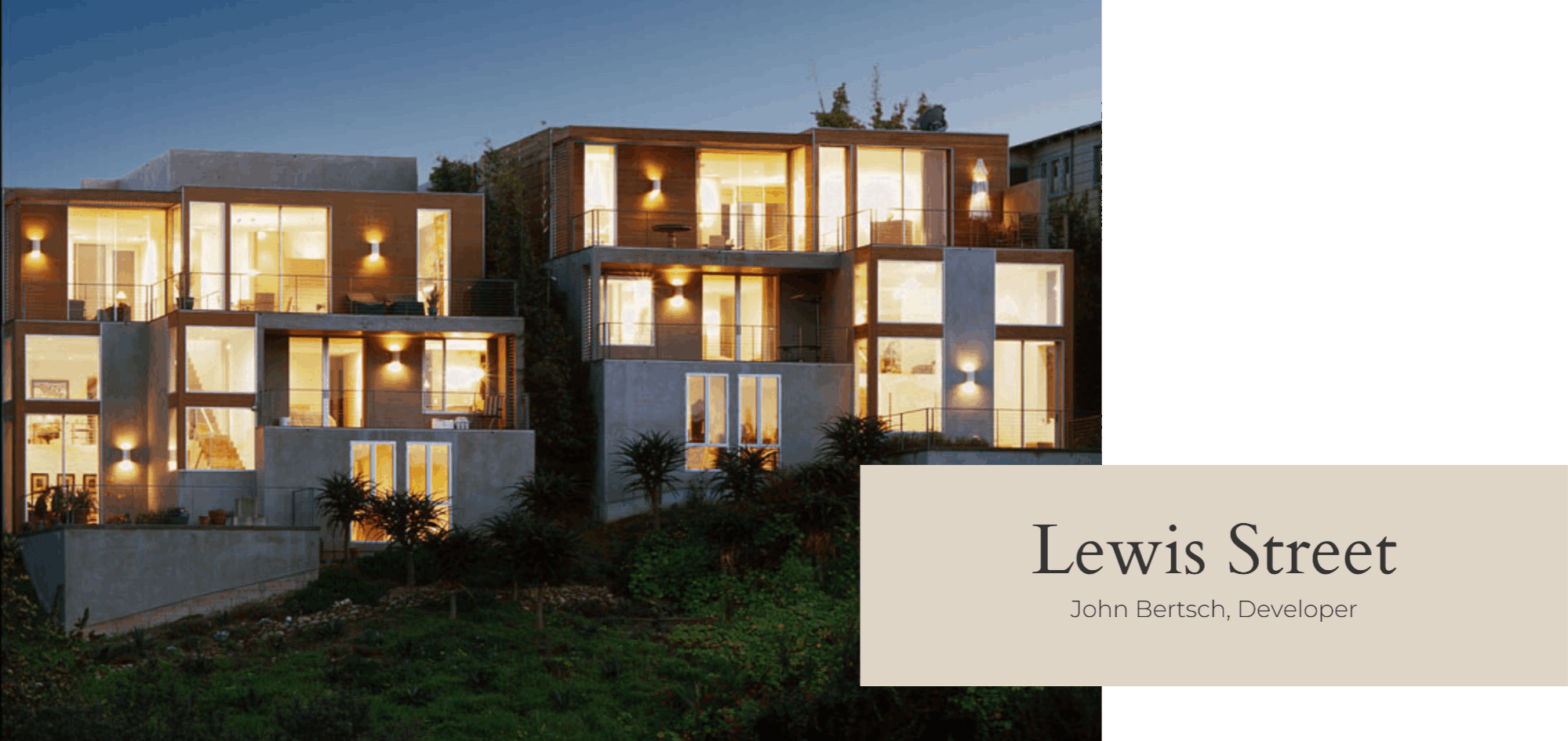
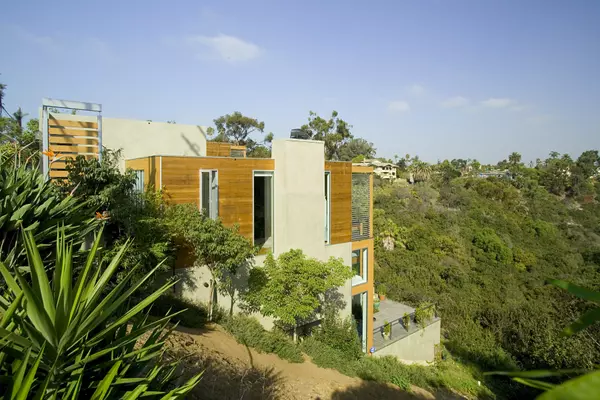
These were my first homes as a developer. An older, run-down house sat on a double lot overlooking a phenomenal canyon. I was ready to pounce, and when the For Sale sign went up I offered full price and a quick close. After confirming the house had no historic significance, we cleared the lot and, working with Safdie Rabines Architects, built two contemporary homes designed to sit lightly in the sensitive canyon habitat.
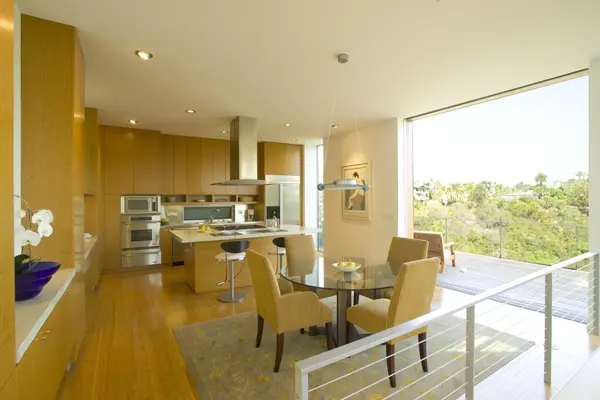
They're handsome and low-slung. Each is three stories, but you'd never know it from the street, because they step down the natural slope instead of perching on top of it. Inside, an 18-foot-tall wall of glass looks straight into the heart of the canyon, and 15-foot-wide pocket doors open onto terraces. We kept the materials simple: bamboo floors, concrete countertops, a stucco exterior. The house was the stage; the view was the show.
The homes were featured in Architect magazine, and more than 20 years later they're still recognized as examples of sensitive, modern design. The project took about twice as long as planned, but San Diego's market was rising at the same time, and the architects, the contractor and I worked together easily from start to finish. It was also when I first realized how many people can't picture something different from what's already there.


Cairo: A 16-Unit Live/Work Building on Park Boulevard, Hillcrest
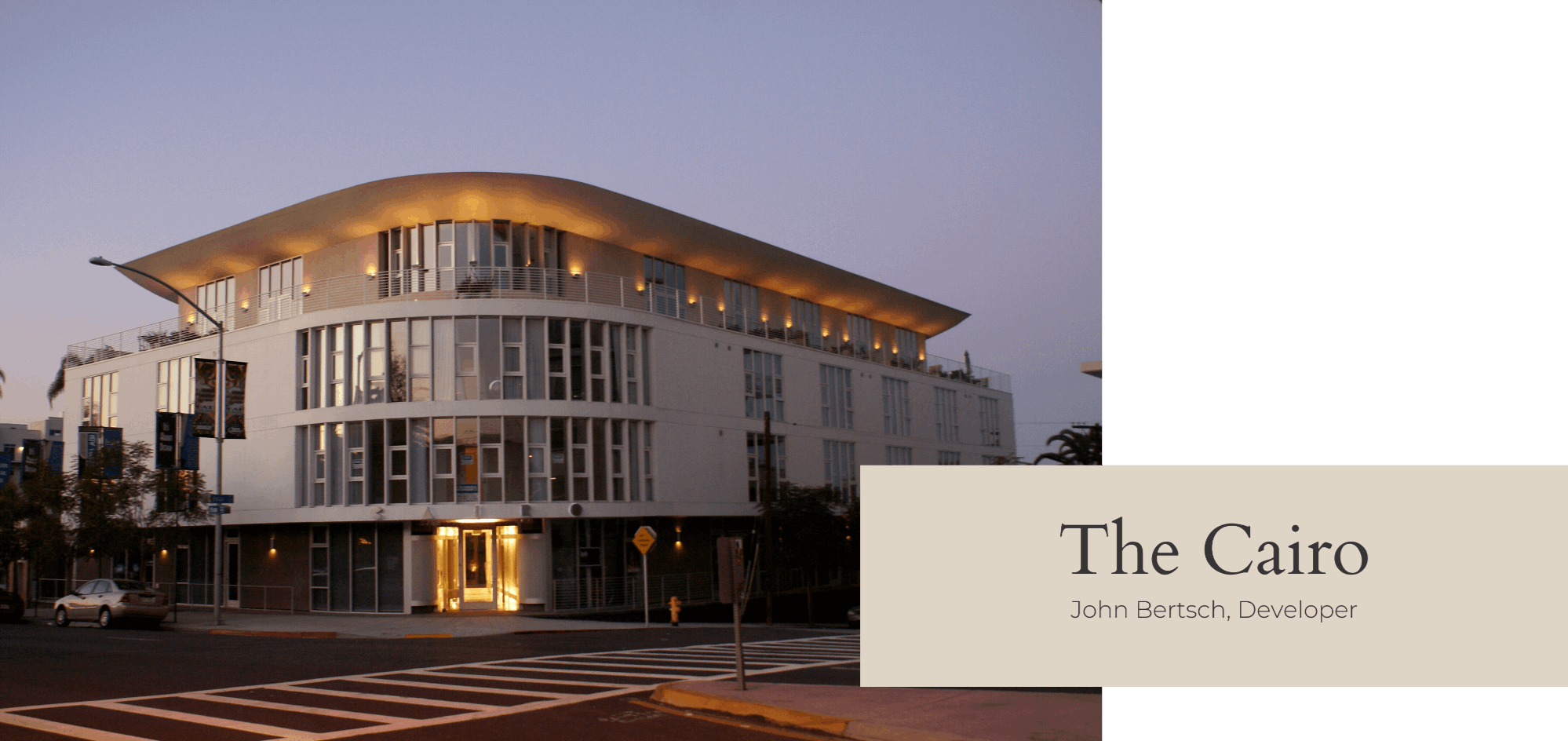
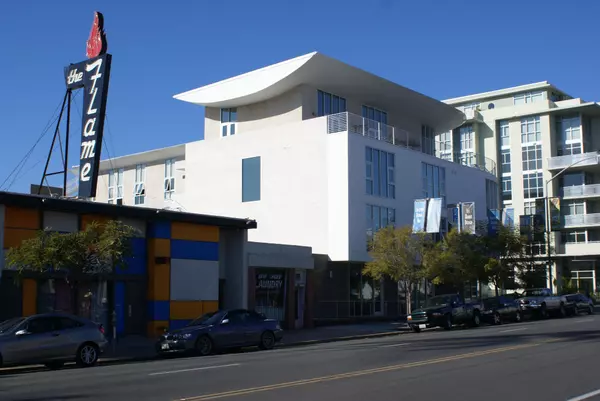
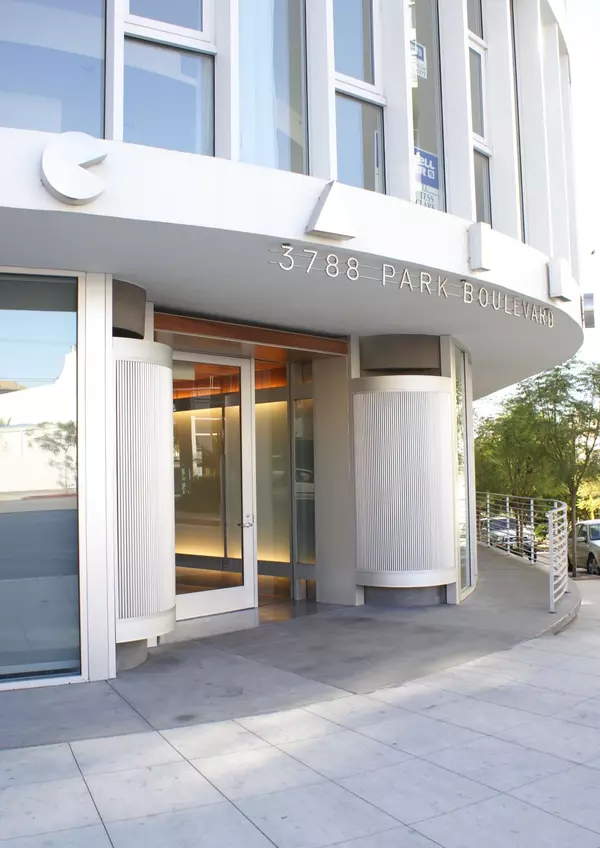
Cairo sits on a double lot at the edge of Hillcrest, on a short stretch of Park Boulevard known for its 1920s Egyptian Revival buildings, the area locals call Little Egypt. The name is a nod to them. Small cottages occupied one lot and the other was vacant, so the property was obviously underused. With Safdie Rabines Architects again, we designed a 16-unit live/work condominium building with a curved front facade that follows its corner and a sweeping roofline that's just poetry. Its lines evoke the Streamline Moderne era, with subtle references to its Egyptian Revival neighbors, and it's scaled right for a denser, more urban block. While Cairo was underway, the San Diego City Council named June 6, 2006 John Bertsch Day in recognition of my contributions to the city.
The hard lesson
I wish the process had gone as well as Mission Hills. We hired the contractor with the lowest bid, and it didn't take long for him and the architects to develop a hostile relationship. As the project fell further behind, my relationship with him suffered too. He was experienced and I was new, and I didn't always know when he was being unreasonable. Replacing a contractor midway rarely helps, because the new one can blame almost any problem on the old one. So I gritted my teeth and carried on.
Then the Great Recession arrived before the building was finished, and I was chasing a falling market. Cairo is a very handsome building, but by the time it was complete there was nothing left for me, and it was the end of my career as a developer. I don't have any regrets. I got to captain my own ship and call my own shots. And it taught me, more clearly than anything, what actually matters to buyers and sellers rather than what a developer assumes matters.


Felton Street, North Park: From Dowdy 1950s House to Sunset-Worthy Home
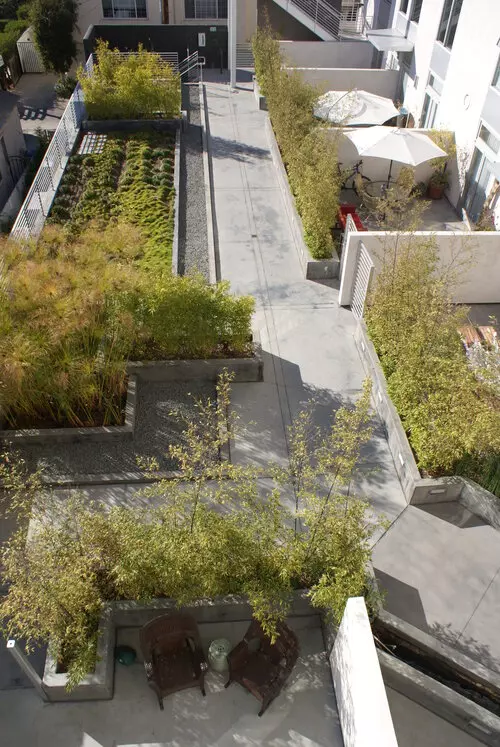
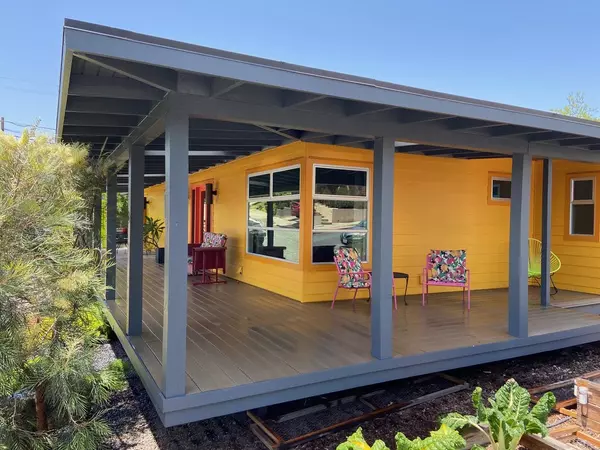
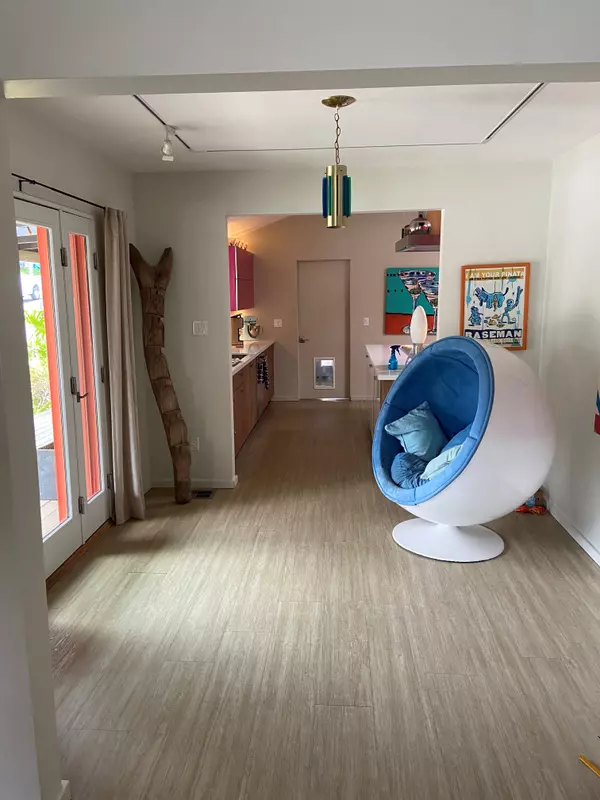
My partner and I bought an anonymous 1950s house in North Park. The exterior was severe and nearly devoid of charm, and instead of seeing that as a liability, I saw it as freedom. Without adding any interior square footage, we reoriented the front door and entry to the side, so the house faces a better view and, most importantly, connects with the neighborhood. No interior walls moved; closing off some doorways and opening others changed the entire flow.
I designed an enormous covered wraparound terrace, so you're protected from the weather but still very much outside, and planted a composition of bright green plants against dark gray pebbles that makes the greenery pop. Just as at Albatross Drive, I added a fountain near the front door, and we get to watch all kinds of birds stop to drink and bathe. Then we painted the exterior an eye-popping yellow. People regularly tell us it belongs in Sunset magazine.
Before


After


Meshuggah Shack: From ATM Hut to Neighborhood Hub in Mission Hills
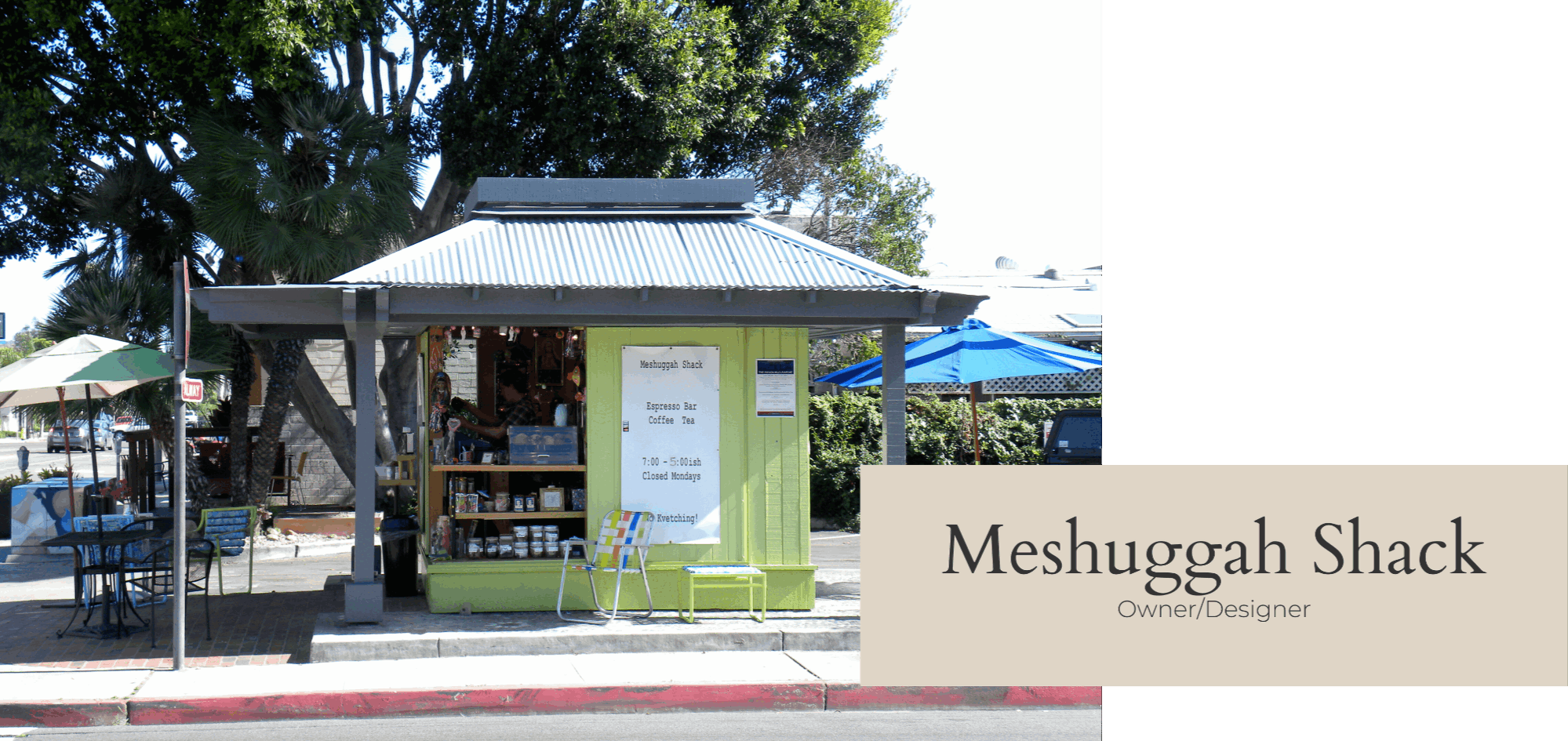
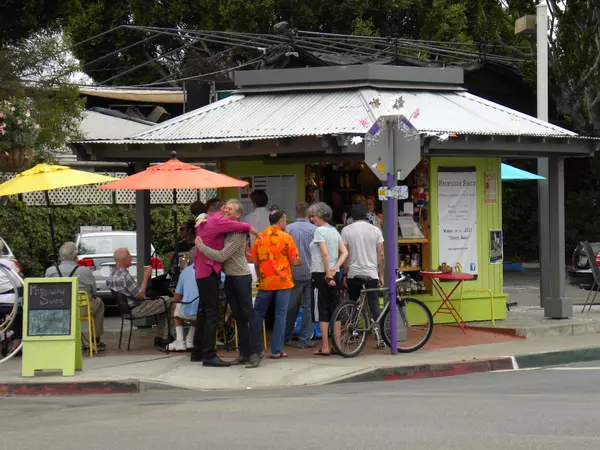
In 2010, at the bottom of the recession, Safdie Rabines bought a building in a prime spot in Mission Hills and invited me to come up with something, anything really, for part of the space. I chose the old ATM hut on the corner, booted out the ATM and created a walk-up coffee bar. I called it Meshuggah Shack; meshuggah is Yiddish for craziness. People were perplexed. I had never run a coffee bar and didn't pull my first shot of espresso until the day before we opened.
The first 18 months were a struggle, and some days I didn't know if I'd be in business the next. But the neighborhood embraced the place, and the Shack helped turn the little Mission Hills business district from stodgy into the cool, beating heart of the area. The San Diego Architectural Foundation recognized the project with an Orchid Award in 2011. I sold the business at the very end of 2019, after a little over 10 years, and moved into real estate full time.



What My Projects Mean When You're Buying or Selling
I'm not drawn to the house that's already been made beautiful. I'm drawn to the one that gives me something to work with: the plain or awkward house other people walk through and dismiss because they can only see what's there now. When I tour a home with you, I'm rarely just looking at the rooms as they are. I'm looking at the light, the land, the relationship between inside and outside, and the spaces nobody is really using. That's especially useful with San Diego's older Craftsman and Spanish-style homes, which often need rethinking to fit the way people live today.
Sometimes the most interesting house isn't the one that makes the best first impression. It's the one that gives you the opportunity to make it your own. Read more about me, explore Mission Hills, or get in touch.
How would you like to put my eye to work for you?
Questions About My Projects
What does a real estate developer do?
A real estate developer brings together everyone needed to get a building made, from the architects and contractor to the surveyor, insurer and lender, and arranges the financing. John compares it to a film producer: not the director or the star, but the person who assembles the team and the money, and who gets paid last, after everyone else.
What is infill development?
Infill development means building on underused land inside an existing neighborhood instead of on open land at the edge of a city. John’s two W. Lewis Street homes in Mission Hills replaced a run-down house on a double lot, and the Cairo building in Hillcrest went up on a partly vacant double lot on Park Boulevard.
Which architects designed John Bertsch’s projects?
Safdie Rabines Architects, a San Diego husband-and-wife firm who lived five houses from John in Mission Hills, designed both the W. Lewis Street homes and the 16-unit Cairo live/work building. The firm also owned the Mission Hills building where John created Meshuggah Shack in 2010.
How does a developer’s background help when buying or selling a home?
John reads a house the way a developer does: the light, the land, how the inside connects to the outside, and which rooms could be reworked without adding square footage. Buyers get help seeing the potential in plain or dated homes, especially San Diego’s older Craftsman and Spanish-style houses, and sellers get a realistic view of which improvements buyers will actually value.
What was Meshuggah Shack?
Meshuggah Shack was a walk-up coffee bar John Bertsch created in 2010 from an old ATM hut on a Mission Hills corner; meshuggah is Yiddish for craziness. It helped revive the neighborhood’s small business district, earned an Orchid Award from the San Diego Architectural Foundation in 2011, and John owned it for a little over 10 years before selling it at the end of 2019.