

Gothenburg: The Swedish City I Wasn't Expecting
After a fabulous few days in Helsinki, we turned west toward Gothenburg, Sweden. I’ll admit it: I really hadn’t done my research. We were meeting my better half’s nephew, and I figured the two of them would more or less set our itinerary. What I knew about Gothenburg could have fit comfortably on an index card: it’s on Sweden’s west coast, it’s the country’s second-largest city, it has a major port, and it’s the home of Volvo.
So, naturally, I pictured docks, cranes, ships, and warehouses. A salty, pervasive smell of fish. Like you see in movies, with the seedy bars and dubious characters lurking around the waterfront.
Whereas Helsinki felt quite compact, Gothenburg felt expansive. Perhaps it really isn’t and I was just experiencing the contrast between the two cities. But there was definitely one thing missing: bidets. I kept going into bathrooms and wondering, Where are the bidets? Why don’t I see any bidets? This is Sweden, for crying out loud. Civilized Sweden. Shouldn’t Sweden have bidets? The answer is, apparently, no. You can certainly buy one in Sweden, but they aren’t a standard bathroom fixture. So much for preconceived notions.
And that turned out to be something of a theme in Gothenburg. The city I had imagined and the city I actually found were two very different places.
A City That Feels Alive
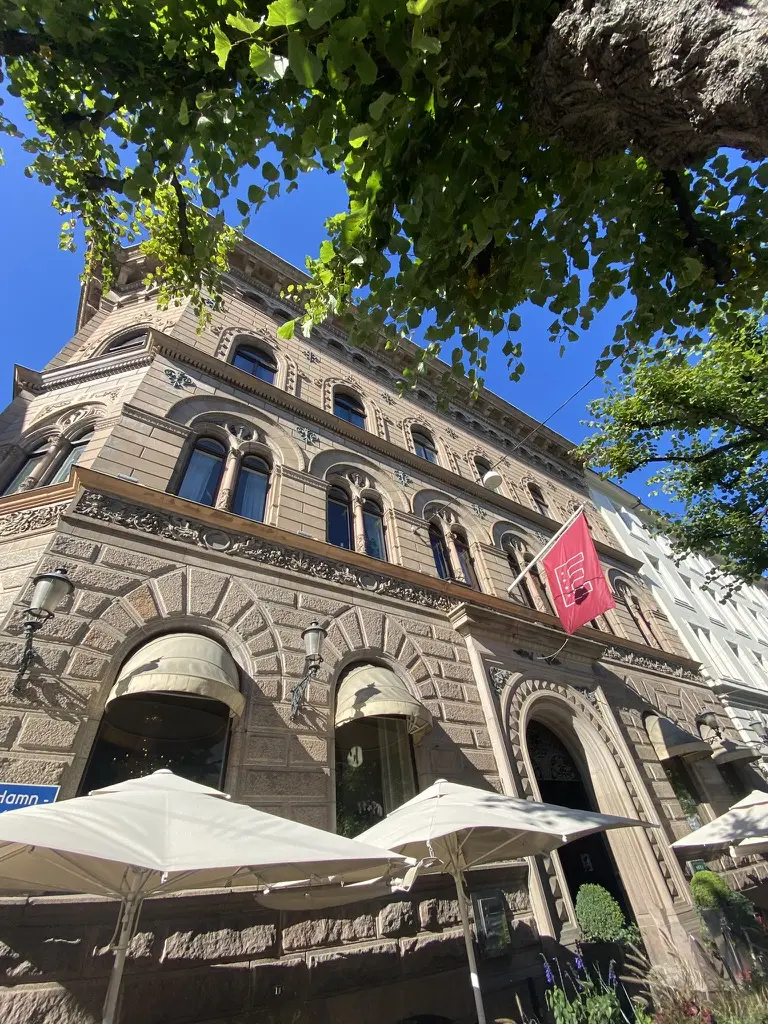
Gothenburg is charming, handsome, and absolutely brimming with energy. We stayed at the Elite Plaza Hotel, right in the center of the city in Inom Vallgraven—literally “inside the moat”—the historic heart of Gothenburg. The location turned out to be one of the best things about the hotel because we could walk out the front door and immediately be in the middle of things.
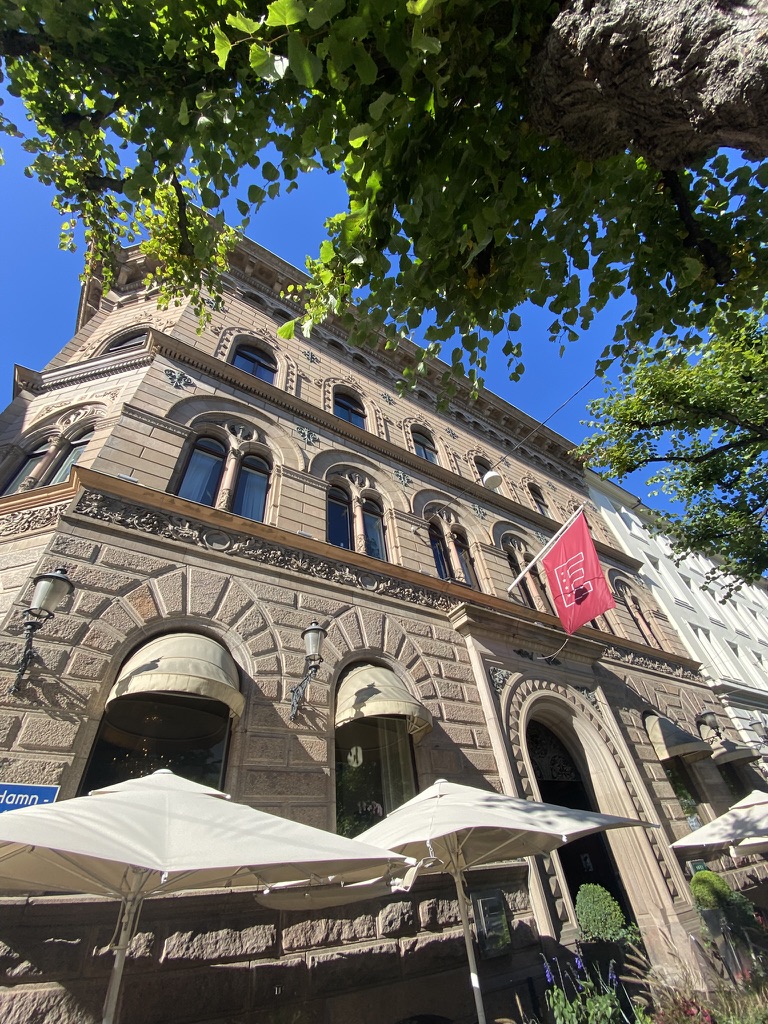
The Elite Plaza Hotel in Gothenburg.
What struck me almost immediately was the amount of pedestrian activity. Not just a pedestrian street here or there, but several blocks where walking, shopping, eating, and simply being outside seemed to be the natural order of things. The city center has three parallel pedestrian-oriented shopping streets—Södra Larmgatan, Vallgatan, and Kungsgatan (and hell no, I can’t pronounce any of those words)—connected to a network of smaller streets, cafés, restaurants, and shops. Gothenburg’s official visitor guide describes the central city as particularly easy to explore on foot, but that dry description doesn’t convey what it actually feels like. The place felt alive.
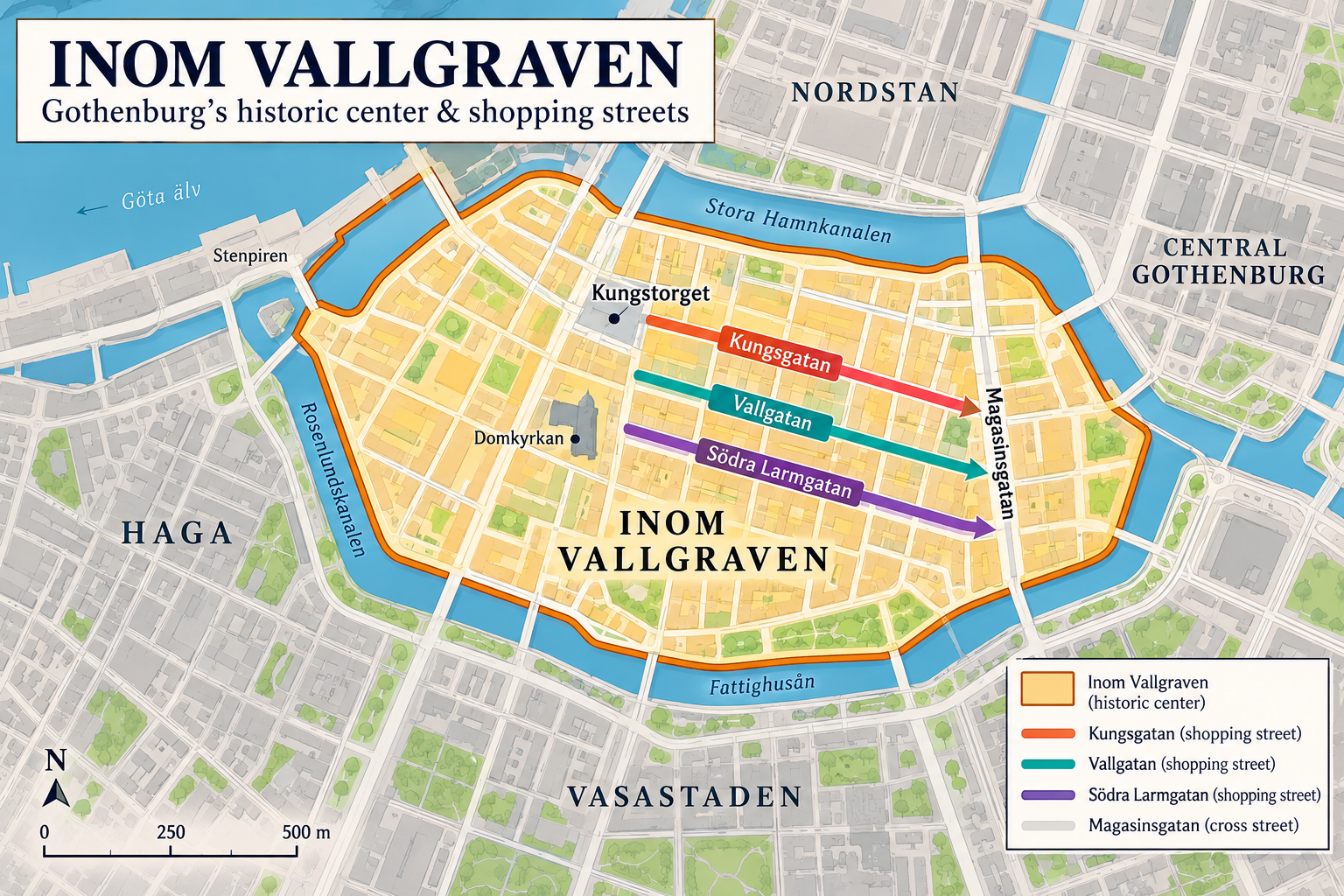
Inom Vallgraven, Gothenburg’s historic center. The map highlights three of the district’s principal shopping streets—Kungsgatan, Vallgatan, and Södra Larmgatan.
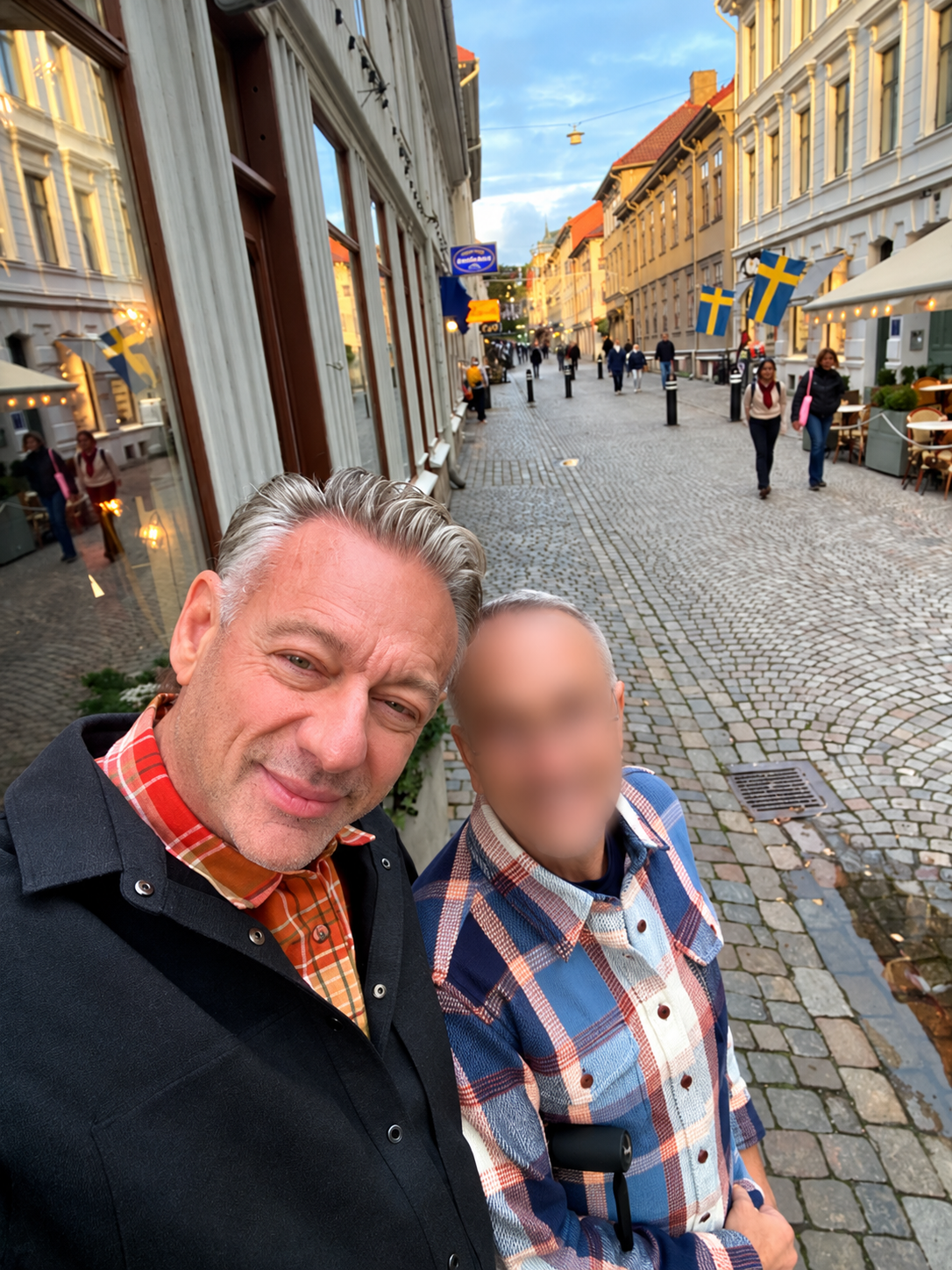
One of several pedestrian-only shopping streets in central Gothenburg.
Where Were Amazon and the Dog Groomers?
What enchanted me most was the variety of businesses. We passed booksellers, clothing stores, home stores, restaurants, cafés, independent retailers, and a couple of gyms. And what I wasn’t seeing: there wasn’t an endless procession of vacant storefronts or blocks where traditional retail had disappeared and been replaced entirely by services that can’t be purchased online. I don’t recall seeing a single tattoo parlor or dog groomer. Instead, people were actually shopping in stores. Apparently these Swedes haven’t received the memo that Amazon had eliminated street retail.
There’s quite an irony here. You might think Sweden, with its cold, dark winters, would be the natural place for everyone to stay home and have everything delivered to the front door. And you might think San Diego, with just about the best weather in the world, would have streets overflowing with pedestrians and outdoor commerce. Yet in central Gothenburg, the street itself remains an important part of daily life. As someone who shops online all the time, I’m hardly in a position to criticize my fellow San Diegans. I’m part of the problem. But wouldn’t it be terrific if more of our neighborhoods had this kind of diverse street life?
What Gothenburg Gets Right About Urban Design
This is where my old urban-design instincts kicked in. Pedestrian-friendly streets are one of the fundamentals of good urban design, but simply widening a sidewalk, planting a few trees, and installing decorative streetlights doesn’t magically produce street life. People need reasons to be there. They need shops to wander into, places to eat, windows to look into, somewhere to sit and, most importantly, other people to watch. And you know, that last part matters more than planners sometimes acknowledge: people attract people.
When I owned Meshuggah Shack in Mission Hills, one of the things that gave me the most pleasure wasn’t simply making coffee drinks. It was creating a presence on the street, giving people a reason to stop, sit, talk, and watch other people go by. You don’t necessarily have to manufacture that kind of activity with some grand civic gesture. Sometimes you simply create the right conditions and let the natural, organic pedestrian flow provide the magic. Gothenburg understands that.
Sidewalk Cafés That Just Kept Going
I could slap myself for taking so few photographs, because what I really wish I’d captured was the extraordinary number of sidewalk cafés. They seemed to stretch for blocks. At times you couldn’t tell where one restaurant ended and the next began; tables, chairs, umbrellas, and people simply flowed from one establishment into another. The Magasinsgatan district, for example, mixes restaurants, cafés, independent stores, and courtyards within the same compact area, exactly the sort of mixture that keeps people moving through a neighborhood throughout the day and into the evening.
It was refreshing, energizing, and heartwarming. This wasn’t a shopping mall trying to manufacture the appearance of a street, nor was it one of those carefully programmed “lifestyle centers” designed to look as though an actual town had spontaneously appeared next to a parking garage. It was a city. Real people, real businesses, and real pedestrian activity.
Dinner at Tavolo
Our favorite meal in Gothenburg was at Tavolo, an Italian restaurant on Magasinsgatan housed in the city’s historic artillery stables. It was busy the night we went and we didn’t have reservations, so we ended up eating at the bar. This turned out not to be a hardship because we were served by our dreamy bartender, Karl. I could have sworn he was flirting with me, but when I mentioned this to my better half, he just rolled his eyes.
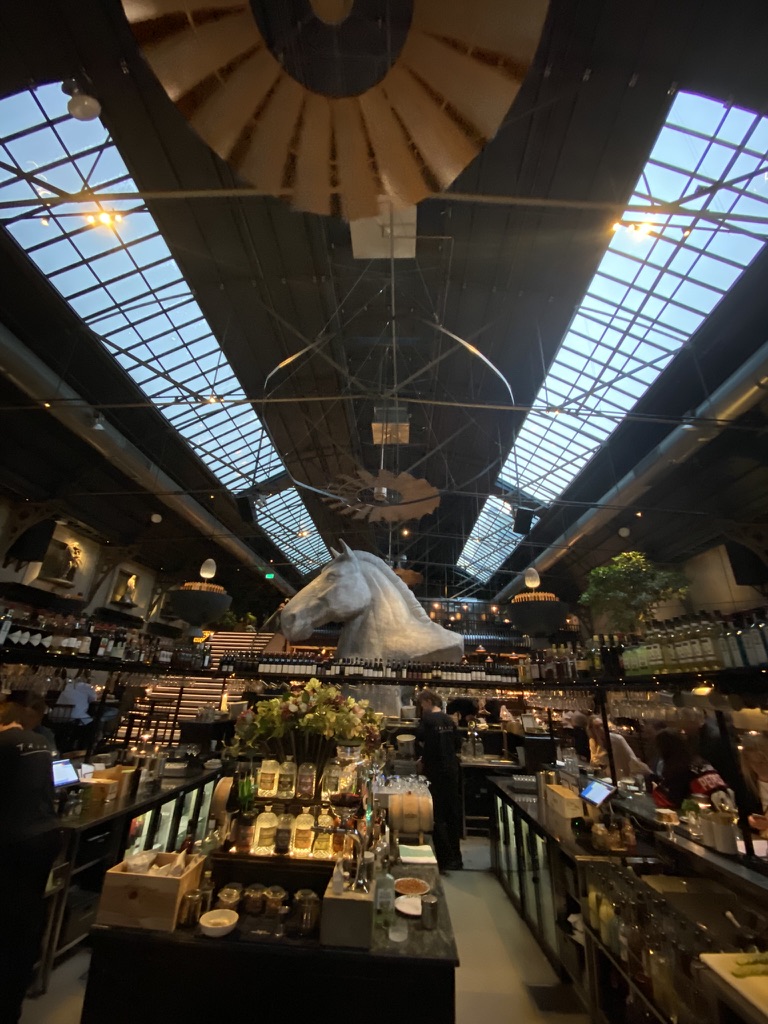
Tavolo
Magasinsgatan 19, 411 16 Göteborg, Sweden
Tavolo Gothenburg
And Where Were All the Dogs?
There was another mystery: dogs. Or, rather, the remarkable lack of them. During our entire stay in Gothenburg, I think we saw perhaps four or five. This was noticeable, coming from San Diego, where dogs have more or less acquired full citizenship status. And I can report with complete confidence that I saw not one dog in a handbag or doggy stroller. Make of that what you will.
The World’s Only Mounted Blue Whale
Gothenburg also provided one of those wonderfully odd discoveries that makes traveling worthwhile. At the Gothenburg Natural History Museum is the Malm Whale, believed to be the world’s only mounted blue whale. The young whale became stranded near Gothenburg in 1865 and measured more than 52 feet long.
And here’s something I knew intellectually but had never really absorbed: the blue whale is friggin’ enormous. An adult can reach roughly 100 feet long and approach 200 tons. We tend to think of dinosaurs as nature’s ultimate exercise in gigantism—and let’s face it, there were some mighty big dinosaurs. But by mass, the blue whale exceeds even the largest known dinosaurs. It’s fun to think about it: the largest animals known to have existed are still out there, swimming around.
Gothenburg Natural History Museum
Museivägen 10, 413 11 Göteborg, Sweden
Gothenburg Natural History Museum
Even IKEA Was Different
And because this is Sweden, sooner or later you bump into IKEA. Except the IKEA we encountered in central Gothenburg wasn’t the enormous blue box surrounded by acres of parking that we Americans know so well. IKEA operates a smaller urban planning-and-order location on Kungsgatan, integrated directly into the shopping district. You can plan and order from the larger IKEA range there rather than wandering through a warehouse and emerging three hours later with a bookcase, twelve tea lights, and several things you have no memory of deciding to buy.
Even IKEA—the company practically synonymous in America with enormous suburban stores—can adapt itself to the pedestrian fabric of a city.
IKEA Göteborg City
Kungsgatan 61, 411 08 Göteborg, Sweden
IKEA Göteborg City
Our Hotel: Grand, Historic and a Little Tired
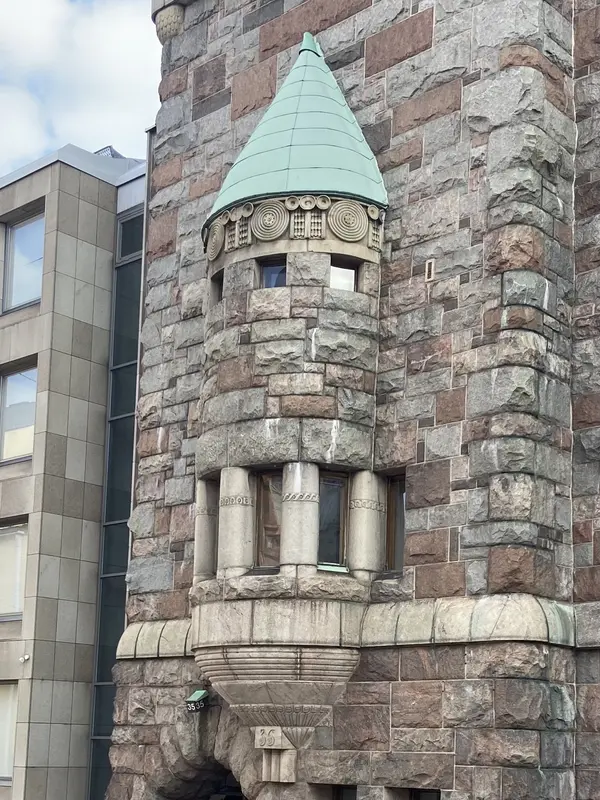
Our home base was the Elite Plaza Hotel, housed in a grand former insurance-company building completed in 1889. The building itself is impressive, with preserved stucco ceilings, mosaic floors, and the kind of architectural detail that immediately tells you it had an important life long before anyone wheeled a suitcase through its lobby. It became the Elite Plaza Hotel in 2000.
I loved the building. The hotel itself? A little less. It felt slightly tattered and faded around the edges, and it certainly didn’t measure up to Hotel Lilla Roberts in Helsinki, which had spoiled us a bit. Would I stay there again? Maybe. Its location was nearly unbeatable, and in a genuinely walkable city, location counts for a lot.
Elite Plaza Hotel Gothenburg
Västra Hamngatan 3, 411 17 Göteborg, Sweden
Elite Plaza Hotel Gothenburg
Gothenburg vs. Stockholm
Apparently there’s also a bit of competition between Gothenburg and Stockholm over which is the better Swedish city. At least that’s what a Gothenburg resident told us before proudly informing us that Gothenburg was, of course, superior. It reminded me of growing up in Texas and the endless competition between Dallas and Houston. Ask someone from Dallas which is better and you’ll get an answer. Ask someone from Houston and you’ll get the correct answer.
What Gothenburg Made Me Think About San Diego
It was a glorious day—about 61 degrees, bright and remarkably clear—when we boarded the train to Stockholm. Like a San Diego sort of day. I liked this city a lot. Not because Gothenburg has one spectacular monument that overwhelms you. What has stayed with me is something subtler: the way the city works at street level. Its shops, cafés, pedestrians, historic buildings, and public spaces reinforce one another. You don’t experience them as individual attractions on a checklist. You experience them together simply by walking down the street.
We often talk about good neighborhoods in terms of houses, architecture, property values, and amenities, and all of those things matter. But the best neighborhoods also possess something harder to quantify: a public life. A sidewalk where you encounter someone you know. A coffee shop where people linger. A bookstore you didn’t intend to enter. A restaurant whose tables spill onto the sidewalk. A storefront that gives you a reason to walk another block. These aren’t frivolous details; collectively, they’re what turn a collection of buildings into a neighborhood.
I spent years thinking about that as an urban designer and developer, and later experienced it firsthand at Meshuggah Shack in Mission Hills. Now, as a San Diego Realtor, I see the same principle from yet another perspective. A great home matters, certainly, but so does what happens when you step outside its front door.
I arrived expecting docks, cranes, and the smell of fish. I departed very impressed by everything this city has to offer a person who’s simply walking down the street.
Frequently Asked Questions About Gothenburg
Is Gothenburg, Sweden a walkable city?
Very much so, particularly in the historic center. Central Gothenburg has several pedestrian-oriented shopping streets, including Kungsgatan, Vallgatan, and Södra Larmgatan, with cafés, restaurants, shops, and public spaces clustered within easy walking distance. Gothenburg’s official visitor guide specifically recommends exploring the central city on foot.
What is Inom Vallgraven in Gothenburg?
Inom Vallgraven essentially means “inside the moat” and refers to Gothenburg’s historic city center, much of which is still framed by the Vallgraven canal. Today it’s one of the city’s principal areas for shopping, dining, hotels, and historic architecture.
What is Gothenburg best known for?
Gothenburg is Sweden’s second-largest city and is particularly associated with its port, Volvo, seafood, nearby archipelago, and lively cultural scene. For me, though, one of its most memorable qualities was something less likely to appear on a list of attractions: the amount of genuine street life in the center of the city.
What are the best areas of Gothenburg for walking, cafés and shopping?
The central streets around Kungsgatan, Vallgatan, Södra Larmgatan, and Magasinsgatan are excellent for exploring on foot. Magasinsgatan is especially interesting for its combination of restaurants, independent shops, design stores, cafés, and courtyards. Haga is another particularly walkable historic neighborhood, known for its cobbled Haga Nygata, cafés, and independent shops.
Is Gothenburg worth visiting if you’re interested in architecture and urban design?
Yes, although I’d broaden the question beyond individual buildings. Gothenburg is interesting because you can see how architecture, retail, transportation, pedestrian streets, cafés, and public space work together. If you’re interested in what makes a city or neighborhood feel successful rather than simply what its landmark buildings look like, there’s a great deal to observe.
What can San Diego learn from Gothenburg?
Attractive paving and landscaping can make for a pleasing visual, but people need reasons to walk: shops, cafés, restaurants, interesting storefronts, and other people. San Diego has the enormous advantage of a climate suited to outdoor life almost year-round. Gothenburg reminded me of how we’re not taking advantage of it.
How many days do you need in Gothenburg?
For a first visit, two or three days gives you enough time to explore the historic center, wander Magasinsgatan and Haga, experience the city’s cafés and restaurants, and visit a museum or two without turning the trip into a race. If you also want to explore Gothenburg’s archipelago, I’d add another day.
Can we take you on our trip to Gothenburg?
You certainly can. BTW, I fly business.
x


GET MORE INFORMATION